
A Short Reflection on Its Radical Reminder in the Time of War
by Romano M. Bulatao, PhD.
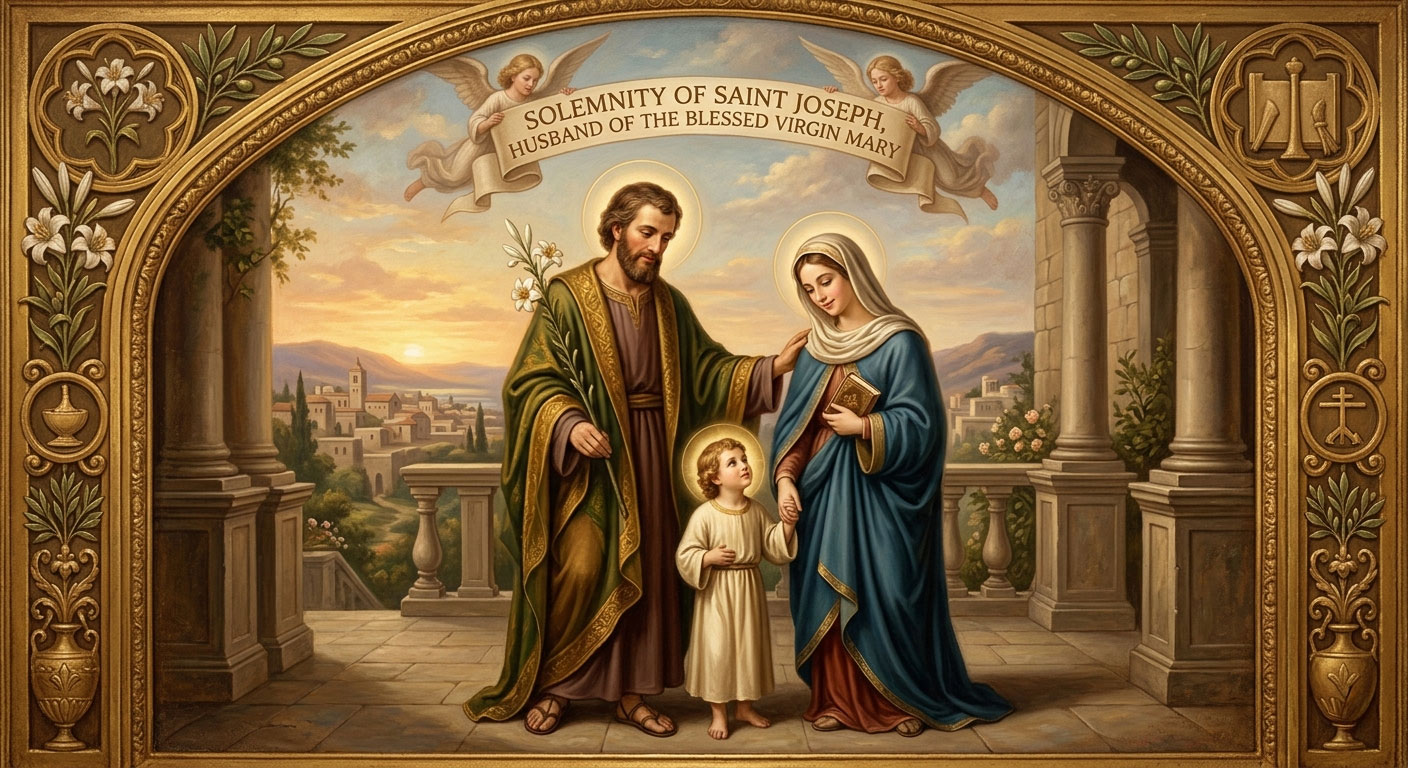
The Feast of Saint Joseph on March 19 is formally known in the Roman Catholic Church as the Solemnity of Saint Joseph, Husband of the Blessed Virgin Mary. This Feast of Saint Joseph is one of the most important celebrations considered by the Church, including other Christian traditions. In this particular feast, Saint Joseph is honored as the husband of the Blessed Virgin Mary and as the earthly father and guardian of Jesus Christ.
As presented in the Gospel stories, particularly in Matthew and Luke, Saint Joseph is a clear model of humility, obedience, and quiet faith. As a person, Saint Joseph is believed to be a humble one, particularly as a carpenter. Pope Francis contends that “Saint Joseph was a carpenter who earned an honest living to provide for his family. Furthermore, Saint Joseph, amidst the many uncertainties in the life, he was steadily silent to listen to God’s will and humbly obeyed and trusted Him. In other words, though he never speaks in the Gospels, his actions in protecting Mary and Jesus, accepting God’s will, and working as a carpenter, it makes him a powerful example of righteousness.
Obviously, Saint Joseph was portrayed in the Gospel stories as “a silent man” in the sense that he never spoke. And yet, it is important to know that while he was so silent, his actions spoke louder than any words he could even utter. Moreover, Saint Joseph is a man of vision towards the mission. He has the capacity to understand the will of God and act on it in the best way he can. On the one hand, Saint Joseph seemed not to be highlighted in the Gospel stories but on the other hand, it seems that this kind of portrayal was intentional for us to notice that his “insignificance” teaches us an important aspect of life that is “being silent.” From the letters of the word “silent,” we can come up with another word, “listen,” which is precisely a typical characteristic of Saint Joseph. In the silence of his dream, “God revealed his saving plan to Joseph,” says Pope Francis. Indeed, Saint Joseph was receptive to the will of God and he immediately acted on it. While it is true that he was seldom mentioned in the Gospels, there were at least three instances when we encounter this phrase, “when Joseph awoke, he did as the Lord has commanded him to do.”
Pope Francis states that “the greatness of Saint Joseph is that he was the spouse of Mary and the father of Jesus.” As a husband, Saint Joseph was portrayed as loyal, gentle, loving, and caring to his wife Mary. As a father, he provided material and religious sustenance, protection, guidance, and teachings to the child Jesus because Joseph is known to be a faithful Jew. For Pope Francis, “God trusted Joseph, as did Mary, who found in him someone who would not only save her life but would always provide for her and her child.” In other words, Saint Joseph has supported and protected Mary and the child Jesus during these hard times when the life situations of both were at stake. Saint Joseph displays, an unwavering trust in God’s plan even it looks unclear. He shows strength and responsibility in silence. Ultimately, Saint Joseph bears his faith which is lived through action rather than words.
Today, the world is enveloped by seemingly hopeless situations. The global unrest in the political and socio-economic are in our midst. Inflations, political disunity, and war are the headlines for each day. Guided by the example of Saint Joseph, can we draw some drops of hope in the midst of war? The Solemnity of Saint Joseph (March 19) may seem quiet and insignificant compared to the scale of today’s global conflicts. But on a positive note, Saint Joseph offers a powerful moral and spiritual lens through which to reflect on war, violence, and peace as follows:
First, Saint Joseph is a model of a just authority. This means that while he had real authority as head of the Holy Family, he never abuses his power. Saint Joseph consistently acts with humility and obedience to God and listens to God, through dreams and discernment before acting. In contrast with this particular characteristic of Saint Joseph, many wars today are driven by pride, ambition, and misuse of authority. Indeed, the feast challenges political and military leaders to exercise authority as service, not domination. Authority then should be aligned with moral principles like justice, restraint, and responsibility. In the words of Pope Leo XIV, “Violence cannot achieve justice, stability, or peace.”
Second, Saint Joseph is a protector amidst danger. This aspect was so clear when he protected and safeguarded the Blessed Virgin Mary and the child Jesus Christ. Saint Joseph brought them to exile in Egypt to escape the violence set forth by King Herod. In line with this, the protection he did to Mary and Jesus makes Saint Joseph deeply relevant in a world where families are forced to flee their homes. War devastates families by way of separation, loss, trauma, and other related effects. This clearly shows that Saint Joseph’s entire mission is to protect and provide for his family. The implication of the feast is that peace begins in the protection of the family. Thus, any political or military decision should consider its impact on ordinary households. In a similar way, protection is what many civilians who are displaced by war needed the most, including the refugees who seek safety across borders. In other words, Saint Joseph becomes a symbol of all who protect life rather than destroy it.
Third, Saint Joseph advocates the dignity of work. As a carpenter, he builds. On the contrary, the result of war is destruction. In other words, war destroys homes, cities, and livelihoods. This further implies that war disrupts economies in particular and human dignity as well. Pope Leo XIV contends that “only dialogue can lead to justice and peace.”
As a final note, the Solemnity of Saint Joseph, Husband of the Blessed Virgin Mary is not a mere devotional, but ultimately it is ethical. This particular feast is an invitation towards a peaceful responsibility. Faced with the ongoing war on some parts of the world, Saint Joseph challenges the leaders concerned to govern with humility and protect life. According to Pope Leo XIV, “Leaders should abandon “projects of death” and renounce war.” In a similar manner, Saint Joseph calls the military to act with conscience, and for the global citizens to value peace, truth, and human dignity. Indeed, a world marked by war, the Feast of Saint Joseph is a quiet but radical reminder to all people of goodwill that the true strength is not found in power or conquest, but in protecting life, building peace, and remaining faithful in responsibility.